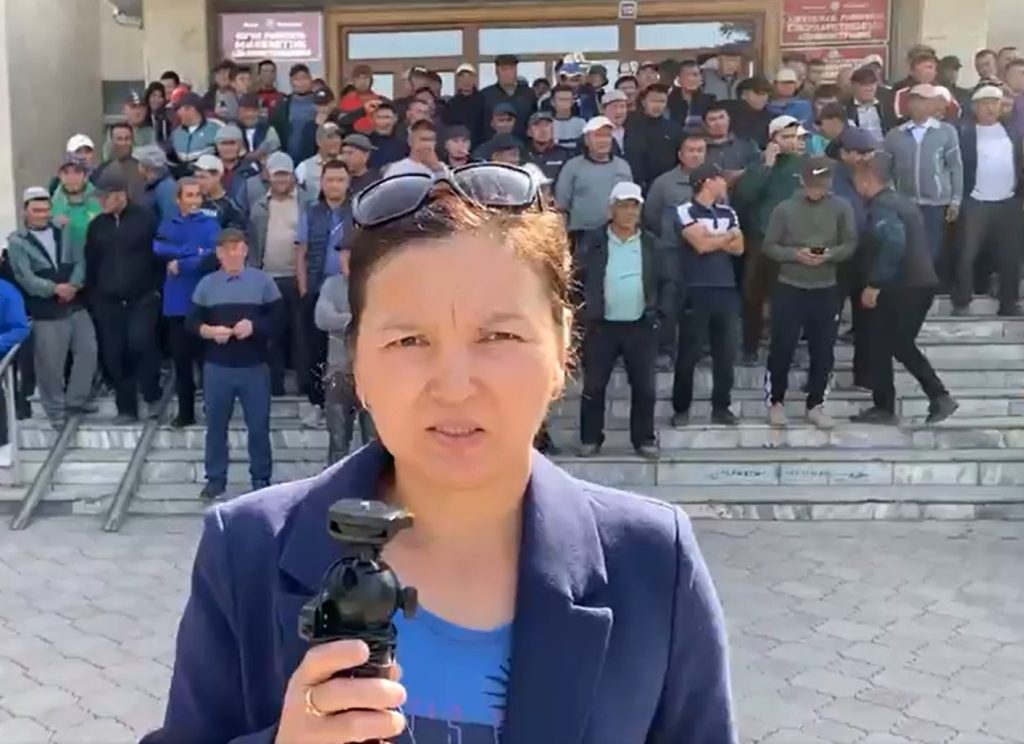
Kanykei Aranova
Activist, blogger. Single mother (1 underage daughter)
Date Detained: 1 February 2024; Arresting authority: State Committee for National Security (GKNB)
Current Status: Currently serving 3 years and 6 months of sentence in a high-security prison; no available avenues for further appeal.
Communication:
Due to the high-security regime:
- Contact is severely restricted
- Limited visits and phone access
- No eligibility for early release or transfer
Lawyer:
Zamir Jooshev
Charges Indicted: Article 327 – “Public calls for the violent seizure of power”
Article 330 – “Incitement of racial, ethnic, national, religious, or regional hatred”
Trial Details: Kanykei Aranova is a civic and political activist in Kyrgyzstan advocating for women’s rights, freedom of expression, and civil society development. In 2022–2023, she actively participated in public protests related to the Kyrgyzstan–Uzbekistan border agreement and the Kempir-Abad water reservoir. Her open criticism of the authorities and active presence on social media led to repressive measures against her.
- Arrest: Detained in Moscow on 1 February 2024 and extradited to Kyrgyzstan by the GKNB.
- Сharged: Under Articles 327 and 330 of the Criminal Code. The prosecution alleged that a her social media account posted calls against the authorities and messages inciting hostility. Aranova denied any connection to the account and emphasized that she had never called for violence.
- First instance court: In July 2024, the Sverdlov District Court of Bishkek sentenced her to 3 years and 6 months of imprisonment.
- Appeal: The Bishkek City Court and the Supreme Court upheld the sentence in 2025.
- No public information on any review of the case.
- On 29 January 2025, the Pervomaiskiy District Court rejected her request for sentence reduction or early release. She participated in the hearing online.
Human rights defender Gulshair Abdirasulova and other civil society representatives consider the case politically motivated and emphasize that neither Aranova nor Torokulova called for violence. They regard the punishment for social media activity as disproportionate and unjust, calling for a fair trial and release.
Prison Details: At the end of 2024, the State Penitentiary Service confirmed that Aranova and another activist, Zarina Torokulova, were transferred from a general-regime colony to a high-security facility for allegedly violating internal rules.
In a high-security facility:
- No eligibility for conditional release
- No transfer to a settlement colony
- Strict limitations on visits and movement
Health Condition: Human rights defenders note that prison conditions are harsh and access to medical services may be insufficient. There is no confirmed official diagnosis or detailed medical information regarding Aranova.
It is generally acknowledged that prolonged detention under such conditions — including stress, isolation, and limited medical care — may negatively affect detainees’ health.
Medical needs:
- Harsh detention conditions
- Limited access to medical care
- Risk of deterioration of health
She is in need of:
- Regular medical examinations
- Timely treatment and access to medication
- Adequate nutrition
- Proper medical monitoring
- Timely treatment
- Access to necessary medicines
- Adequate quality of care