

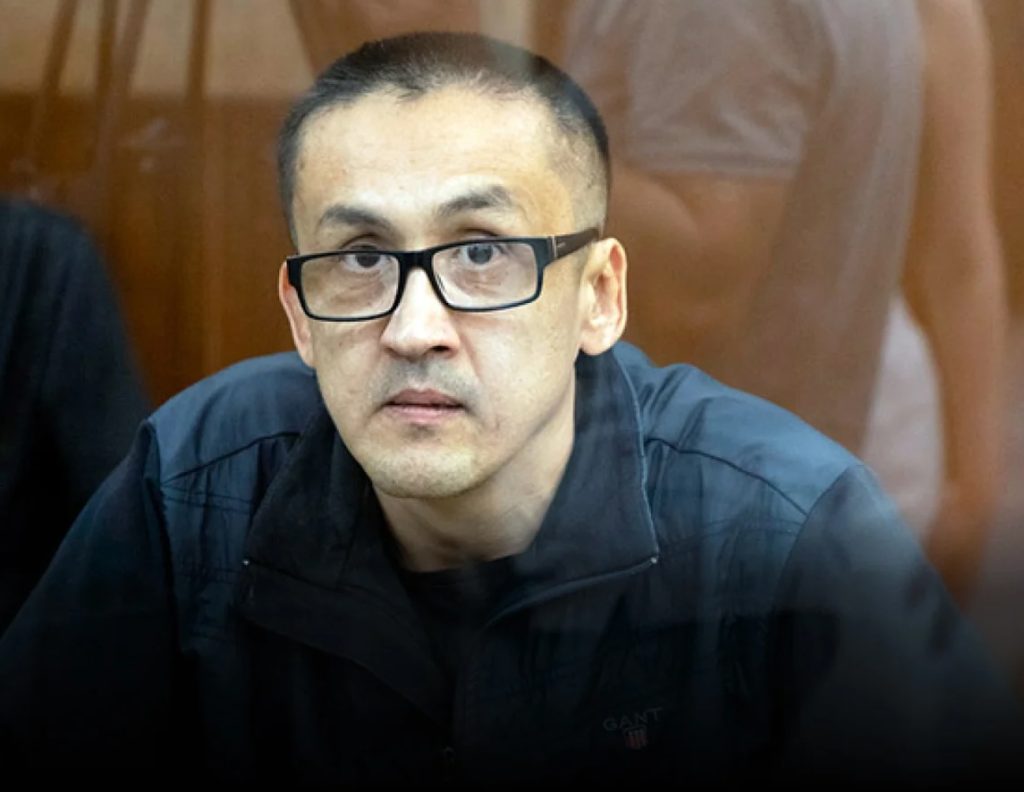
Dauletmurat Tazhimuratov
Human rights defender, lawyer, independent journalist, civic activist
Sentenced to 16 years in a high-security Prison Penal Colony No.11 in Navoi Region, Uzbekistan
Charged under Criminal Code of Uzbekistan Article 167 – Embezzlement or misappropriation.
Article 243 – Legalization of proceeds obtained through criminal activity (money laundering).
Article 104 – Intentional infliction of grievous bodily harm.
Article 159 – Encroachment on the constitutional order of the Republic of Uzbekistan.
Article 244 – Mass disorders (riots).
Article 244-1 – Production, storage, distribution or display of materials containing a threat to public security and public order.
Dauletmurat Tazhimuratov is a Karakalpak lawyer, journalist, and human rights activist sentenced to 16 years in a high-security prison colony for allegedly organizing the July 2022 Nukus protests against constitutional amendments that sought to strip Karakalpakstan of its sovereignty and its constitutional right to secession via referendum.
In June 2022, the Uzbek government introduced these proposed amendments to the Constitution, triggering widespread anger in Karakalpakstan. On 1 July 2022, mass demonstrations broke out in Nukus. Authorities accused Tazhimuratov of being one of the main organizers. He was detained before the protests, reportedly beaten, briefly released, and then rearrested as the unrest spread. During the violent crackdown, at least 21 people were killed and more than 500 were injured, according to official figures, though independent researchers and International human rights groups believe the real numbers are higher.
Tazhimuratov’s trial began in late 2022 in Bukhara, deliberately held far from Karakalpakstan to limit public access. He was prosecuted alongside 21 co-defendants, including activists, journalists, and ordinary citizens, who were accused of participating in the protests. In January 2023, he received the harshest sentence – 16 years in prison. International human rights groups, including Amnesty International, Human Rights Watch, IPHR, Freedom for Eurasia, and Freedom House, condemned the proceedings as politically motivated, citing the use of coerced testimony, restrictions on independent monitoring, and visible signs of ill-treatment during court sessions.
Today, Dauletmurat Tazhimuratov is regarded as a symbol of resistance in Karakalpakstan, embodying the demand for sovereignty, cultural rights, and political freedoms. His case illustrates the Uzbek government’s intolerance of dissent, the criminalization of peaceful activism, and the use of mass trials to silence local voices.
Dauletmurat Tazhimuratov is currently held in High-Security Prison Penal Colony No. 11 in Navoi Region, Uzbekistan, under extremely harsh and degrading conditions. Reports indicate that he faces severe restrictions on family visits, communication, and access to independent legal aid. His family and attorney have raised serious concerns that authorities subject him to psychological pressure, torture, and forced isolation. He has been attacked by cellmates on ethnic grounds, reportedly at the instigation of the prison administration.
Tazhimuratov was denied food during Ramadan, repeatedly placed in harsh solitary confinement, and subjected to mockery and abuse from prison staff. He has faced constant threats, denial of access to the library or news sources, and was even forced to sing the Uzbek national anthem, with refusal leading to solitary confinement as punishment. In addition, prison staff reportedly played the same music on repeat in his cell for prolonged periods, a method widely recognized as a form of psychological torture.
These treatment patterns amount to systematic ill-treatment and persecution, raising grave concerns for his physical safety, mental health, and basic human dignity.
Before his detention, Dauletmurat Tazhimuratov was in good health. However, during his initial arrest in July 2022, witnesses reported that he was beaten by police and subjected to torture. Since then, his health has reportedly deteriorated in prison due to harsh detention conditions, being forced to perform hard labor without proper equipment, constant stress, and the lack of adequate medical care. No official medical updates have been provided, and independent doctors have been denied access to examine him. His family has expressed deep concern for his long-term physical and psychological wellbeing, particularly given the length and severity of his 16-year sentence.


