

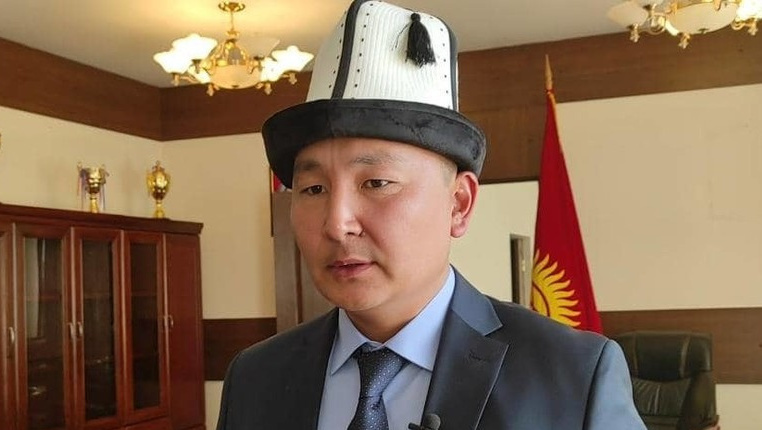
Aibek Buzurmankulov
Former governor of Talas region, co-chair of the Erkin El party, and founder of the youth organization Ak Shumkar Kut.
House detention on Kempir Abad case.
Currently, the case is under review in the city court (second instance), and a verdict has not yet been delivered.
1. March 18, 2017 – “Freedom of Speech March” Case
Buzurmankulov was detained during a rally in support of freedom of speech. He was charged under:
Article 174 – Failure to comply with the lawful demands of a Ministry of Internal Affairs officer;
Article 371 – Illegal obstruction of road traffic.
2. October 23, 2022 – “Kempir-Abad” Case
He was arrested along with other activists and opposition politicians protesting the transfer of the Kempir-Abad reservoir to Uzbekistan. Charges included:
Article 278 – Organizing mass riots;
Article 327 – Calls for the violent seizure of power.
1. Freedom of Speech March (2017)
On March 18, 2017, a large protest march in defense of freedom of speech and civil rights took place in Bishkek. Although organizers had submitted a request for official permission, authorities attempted to stop it. During the march, participants walked through Bishkek’s streets voicing their demands. Police intervened harshly, claiming participants blocked roads and violated administrative rules. Buzurmankulov and other activists were detained and charged with “illegal obstruction of traffic” and “failure to comply with lawful police orders.” The court upheld the legality of their detention and sentenced them to five days of administrative arrest.
This incident sparked broad public debate on restrictions of free speech and civil rights in Kyrgyzstan. While the detention was brief, it highlighted the growing use of police repression against civic activism.
Kempir-Abad Case (2022–2024)
Buzurmankulov later emerged as one of the opposition and civil society figures criticizing the border agreement with Uzbekistan, particularly the transfer of the Kempir-Abad reservoir. Drawing on his political standing, he called for transparency, legality, and public participation, urging authorities to engage in open dialogue.
In October 2022, he was arrested as part of the mass detentions in the Kempir-Abad case and accused under the Criminal Code of:
Article 278 – Organizing mass riots,
Article 327 – Calls for the violent seizure of power.
While in pre-trial detention, Buzurmankulov faced extremely harsh and inhumane conditions, confined in cold and poorly ventilated cells. In protest, he went on a 14-day hunger strike in 2022, which severely damaged his health. His wife, Tolgonai Soltonova, actively advocated for his and other political prisoners’ release. On January 10, 2023, she joined the peaceful “March for Rule of Law” in Bishkek. She and 26 others were detained by police. Later, the Pervomaisky District Court fined her 3,000 soms under the charge of “failure to comply with lawful police orders.” These events underscore how both Buzurmankulov and his family were subjected to political and moral pressure, and how the Kempir-Abad case became a powerful symbol of political repression in Kyrgyzstan.
Despite repeated appeals from his lawyers, Aybek Buzurmankulov was denied adequate medical care and was not hospitalized when needed. While in pre-trial detention, he openly stated several times that he had been subjected to torture and pressure. These conditions were widely recognized as political persecution and drew strong criticism from international human rights organizations, which assessed them as gross violations of human rights. The harsh conditions of detention, combined with his 14-day hunger strike, severely damaged Buzurmankulov’s health. He required continuous medical supervision and treatment, but the detention facility did not provide such care. Over time, his health deteriorated, and he reported developing additional illnesses as well as injuries caused by mistreatment. He remains in need of regular medical monitoring and access to specialized healthcare.


