

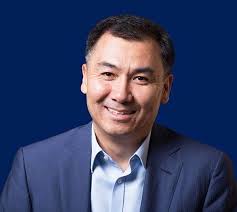
Ravshan Jeenbekov
Lawyer and socio-political figure.
House detention
Verdict was issued in the court of first instance (publicly known as the “Kempirabad case”) in 2024. Currently, the case is under review in the city court (second instance), and a verdict has not yet been delivered.
Koi-Tash case:
Article 41(2), Article 374(2) – Threats or violence against a government representative
Article 41(2), Article 355(2) – Threats or violence related to pre-trial proceedings
Article 278(1) – Organization of mass riots
Article 43(2), Article 337 – Obstruction of the work of a prosecutor, investigator, or authorized official
Article 43(2), Article 39, Article 309 – Attempted crime and attempt to seize power by force
Article 43(2), Article 244(2) – Taking of hostages
Article 43(2), Article 257(2) – Theft or extortion of firearms
Kempir-Abad case:
Article 278 – Organization of mass riots
Article 327 – Calls for the violent seizure of power
Ravshan Jeenbekov is an opposition politician and lawyer in Kyrgyzstan, known for his advocacy of democracy, systemic reforms, and human rights. He has been outspoken on border issues, economic policy, and other major political debates, and has run for high-level office, including the presidency. His work has centered on increasing government accountability, fighting corruption, and strengthening civic awareness.
1. Kempir-Abad Case (2022–2024)
Jeenbekov was a member of the Committee to Protect Kempir-Abad, created during public protests against the transfer of the Kempir-Abad reservoir to Uzbekistan. In October 2022, he and 22 others were arrested and charged with “organization of mass riots” and “attempt to seize power.” Jeenbekov publicly denounced the charges as politically motivated. In June 2024, the Bishkek City Court acquitted him along with 21 other defendants.
2. Koi-Tash Events (2019–2020)
Following the violent operation to detain former President Almazbek Atambayev in August 2019, Jeenbekov was accused of organizing mass riots, taking hostages, and attempting to seize power. He was arrested in December 2019. In June 2025, the Pervomaisky District Court sentenced him to 7 years and 8 months in prison.
3. Persecution of Family and Associates
His family members have also been targeted:
Wife, Salima (Salkynai) Alimbaeva – detained by the State Committee for National Security in May 2023 on bribery allegations of USD 500,000, despite her poor health. Widely viewed as politically motivated.
Son, Azat Jeenbekov – questioned in the Next TV case under charges of “inciting inter-ethnic hatred,” seen as pressure on the family.
Sister, Mira Jeenbekova – faced charges in 2021 of “illicit enrichment” and “corruption” with related investigations into her property and finances.
Assistant, Aisuluu Kudaiberdieva – charged in 2022 with illegal border crossing.
Additionally, in 2025, a new case was opened against Next TV channel, close to Jeenbekov’s family, under “incitement of inter-ethnic hatred.”
Overall Context
Taken together, these prosecutions point to a sustained campaign of political persecution against Jeenbekov and those close to him. His opposition to authoritarian practices has made him a target, and international human rights organizations recognize him as a political prisoner. The targeting of his family members is widely viewed as an extension of political pressure on the opposition.
Since his first arrest in 2019, Ravshan Jeenbekov’s health has significantly deteriorated. Harsh prison conditions, viral illnesses (including hepatitis B), repeated hunger strikes, and prolonged stress have all aggravated his state. Conditions during the pandemic, combined with inadequate medical treatment, worsened his liver function. Even after, while still in custody, his health did not stabilize, with chronic illnesses intensifying and constant stress persisting. On January 27, 2023, Jeenbekov appealed to the Prosecutor General requesting an independent medical commission to treat his liver. By February 14, his condition sharply worsened, and he was hospitalized in a private clinic (KafMedCenter). Medical examinations confirmed serious liver problems. Distrustful of prison medical staff, he chose to undergo treatment at the clinic instead. He currently requires ongoing medication to support his recovery.
Jeenbekov requires specialized medical supervision and treatment, including care for viral and chronic illnesses as well as stress management. Detention conditions have created significant barriers to adequate treatment, preventing him from receiving the comprehensive care his health situation demands.


