

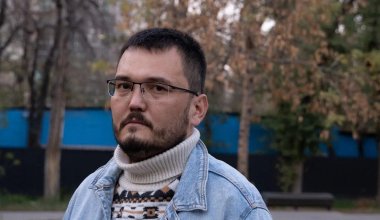
Akylbek Muratbai (Muratov )
Since 2013, Akylbek has been an active member of the Karakalpak diaspora in Almaty and is recognized as an informal community leader. His activism focuses on preserving Karakalpak language, culture, and history, as well as coordinating humanitarian and legal assistance for labor migrants from Karakalpakstan and Uzbekistan.
In June 2022, following the announcement of proposed constitutional amendments affecting the status of Karakalpakstan, Akylbek organized a petition campaign across several Kazakhstani cities, including Almaty, to oppose the changes. The campaign was halted by local authorities the same day. In the days that followed, he held meetings with city officials and Uzbek consular representatives, urging peaceful intervention to de-escalate tensions. After protests in Karakalpakstan were violently suppressed, Akylbek proposed creating a humanitarian fund to aid victims, but was warned that such efforts could be criminalized by Uzbek authorities as “terrorism financing.”
On February 15, 2024, Akylbek was arrested by Kazakh police on an extradition request from Uzbekistan and held in pre-trial detention for a year under politically motivated charges of inciting unrest. He was released on February 15, 2025. Despite these risks, Kazakhstan denied him asylum; the denial was upheld in lower courts and is now pending a final decision from the Supreme Court, expected in late 2025. If rejected, Akylbek faces the real danger of extradition and further persecution in Uzbekistan.
Akylbek is charged under Articles 244, part 2, paragraph “b” and 244-1 part 2, paragraph “g” of the Uzbekistan Criminal Code:
– a public call for mass riots and violence against citizens using mass media, telecommunications networks, the worldwide Internet information network, as well as printed or other means of reproducing text and is punishable by a fine of three hundred to four hundred basic calculation values or correctional labor from two to three years or imprisonment from five to ten years.
– Dissemination in any form of information and materials containing ideas of religious extremism, separatism and fundamentalism, calls for pogroms or forced eviction of citizens or aimed at creating panic among the population, as well as the use of religion for the purpose of violating civil consent, spreading slanderous, destabilizing fabrications and committing other acts directed against established rules of behavior in society and public safety, as well as the dissemination or demonstration of attributes or symbols of religious extremist, terrorist organizations using mass media or telecommunications networks, as well as the worldwide Internet information network and are punishable by imprisonment from five to eight years.
The charges of “public calls for mass unrest and violence” are brought against Muratov for a memorial event in honor of 500 days since the events that occurred in July 2022 in Nukus. The memorial rally took place on November 13, 2023 – Karakalpak activists asked participants to turn off the lights for 16 minutes – the number of years in prison given to human rights activist Dauletmurat Tazhimuratov. The charges of “production or demonstration of materials containing a threat to public safety” were brought against him for publishing a video of Karakalpak activist Koshkarbay Toremuratov’s speech at the OSCE conference in October 2023.
BACKGROUND: re mass protests erupted in Karakalpakstan on July 1 and were violently suppressed. After suggesting a humanitarian fund to aid victims, he was threatened by Uzbek authorities with prosecution for “terrorism financing.” From June to July 2022, Akylbek was summoned for questioning seven times by various Kazakh law enforcement and security agencies, including a three-hour interrogation involving Uzbek officials. In October 2023, SNB threats extended to his relatives in Uzbekistan, demanding he cease all civic activity. He also received pressure from the Uzbek Consulate in Almaty to moderate his public statements.
Akylbek was convicted in absentia in Uzbekistan without proper notification of the criminal case against him. He was given no opportunity to defend himself, and his legal interests were not represented in court. The proceedings followed a politically motivated directive, and Akylbek only learned of the verdict when he was detained in Kazakhstan based on Uzbekistan’s extradition request.
Akylbek spent one year of his life in a pre-trial detention center in Kazakhstan.


