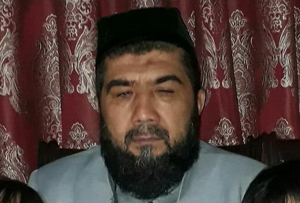
Tulkun Astanov
Muslim activist and religious-freedom advocate. Astanov was known for peaceful advocacy on behalf of religious freedom and the rights of Muslims in Uzbekistan, including public protest and online criticism of restrictions on religious practice
Date Detained: Astanov was arrested on 22 November 2020 after protesting outside the presidential residence in Tashkent to call for the release of an imprisoned Qur’an reciter.
Current Status: He remains imprisoned as of 2025. Though his original sentence was approaching completion, Uzbek authorities initiated a new case against him in May 2025 and extended his imprisonment with an additional three years and two months sentence. Authorities accused him of refusing to attend morning exercises in prison and of disobeying lawful orders.
Charges Indicted: His initial conviction included being charged with violating the terms of probation linked to his advocacy — previously involving Article 244-1.3 of the Criminal Code (distribution of materials seen as a threat to “public security and public order” via media) resulting in a five-year sentence.
In 2025, a new criminal case was brought under Article 221 part 2(b) for allegedly “disobeying lawful requirements of the administration of a penal institution” — stemming from alleged refusal to participate in morning physical exercises at the prison, according to official reporting.
Trial Details: Astanov’s first conviction was handed down by the Uchteppa District Criminal Court in Tashkent on 27 November 2020, sentencing him to five years’ imprisonment after he defended Muslims’ religious freedom and visited communities despite a suspended sentence from 2019.
His appeal was rejected on 5 January 2021.
In May 2025, as his five-year term neared its original end, a Bukhara Region court found him guilty of the prison-regulation charge and imposed an additional sentence of 3 years and 2 months in a strict-regime labor camp.
Prison Details: Astanov was initially held in General Regime Prison No. 1 in Bukhara Region (Kogon district), where he previously suffered reported torture and ill-treatment for exercising his religious practices (such as praying) — including repeated punishments and transfers to punishment cells.
After the additional sentence in 2025, he continues to serve in a strict-regime penal camp under close supervision; his family and monitors report ongoing punitive measures.
Health Condition: Astanov’s health has reportedly deteriorated significantly in detention:
Human-rights sources say he has suffered multiple strokes while in custody.
He is said to have been tortured in prison for praying (e.g., beaten and threatened), resulting in serious physical consequences requiring medical treatment.
Requests for medical exemptions (e.g., from physical exercises) were reportedly dismissed by authorities, and prison medical care has been inadequate according to his family and legal counsel.